Day 1 — Marrakech to Dadès: Over the Atlas, Into the Earthen South
Marrakech gradually drops behind you as the road climbs into the High Atlas. Around the bends, the view shifts between steep slopes, terraced patches of cultivation and villages whose earth-coloured walls blend into the mountainside. The Tizi n’Tichka crossing makes this a winding mountain journey, with changing views rather than a straight run across the country. At the scenic breaks, take a moment to look back across the folds of the mountains: they explain why travel between Marrakech and the south has always been shaped by the passes.
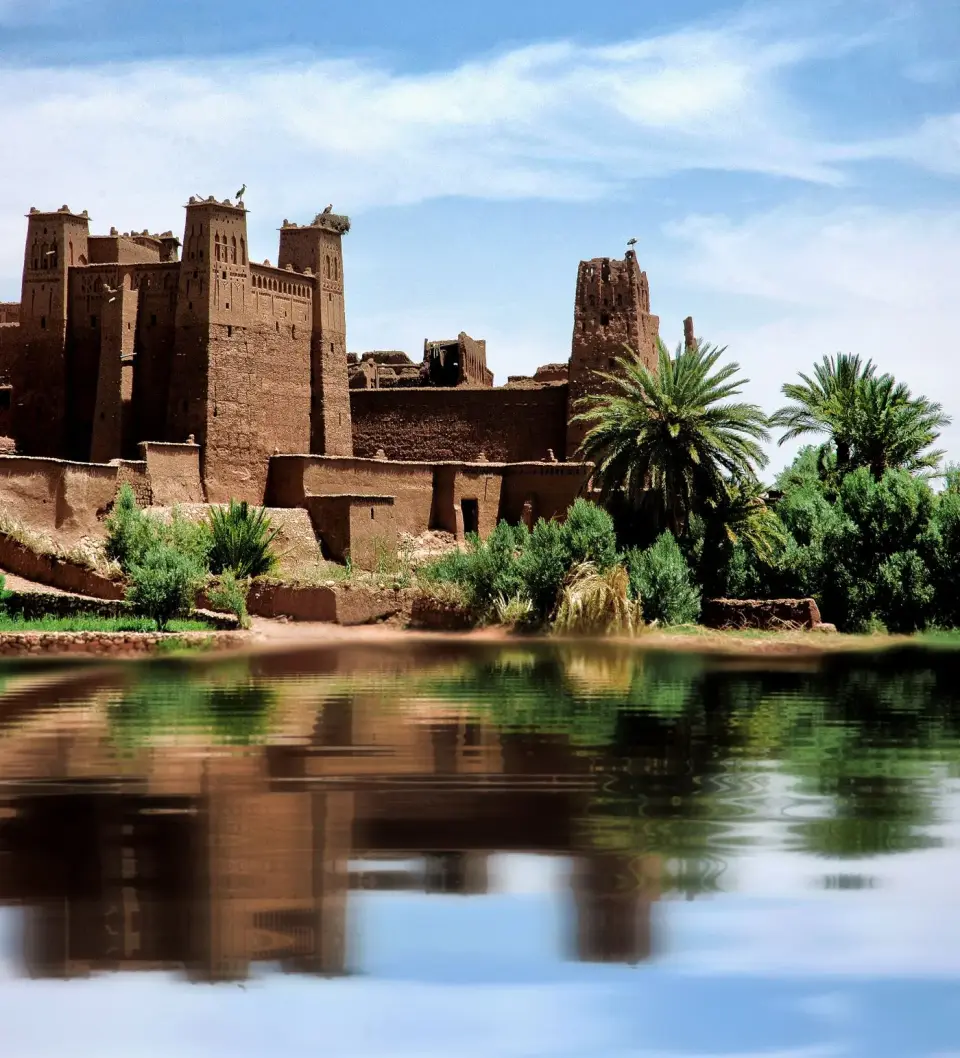
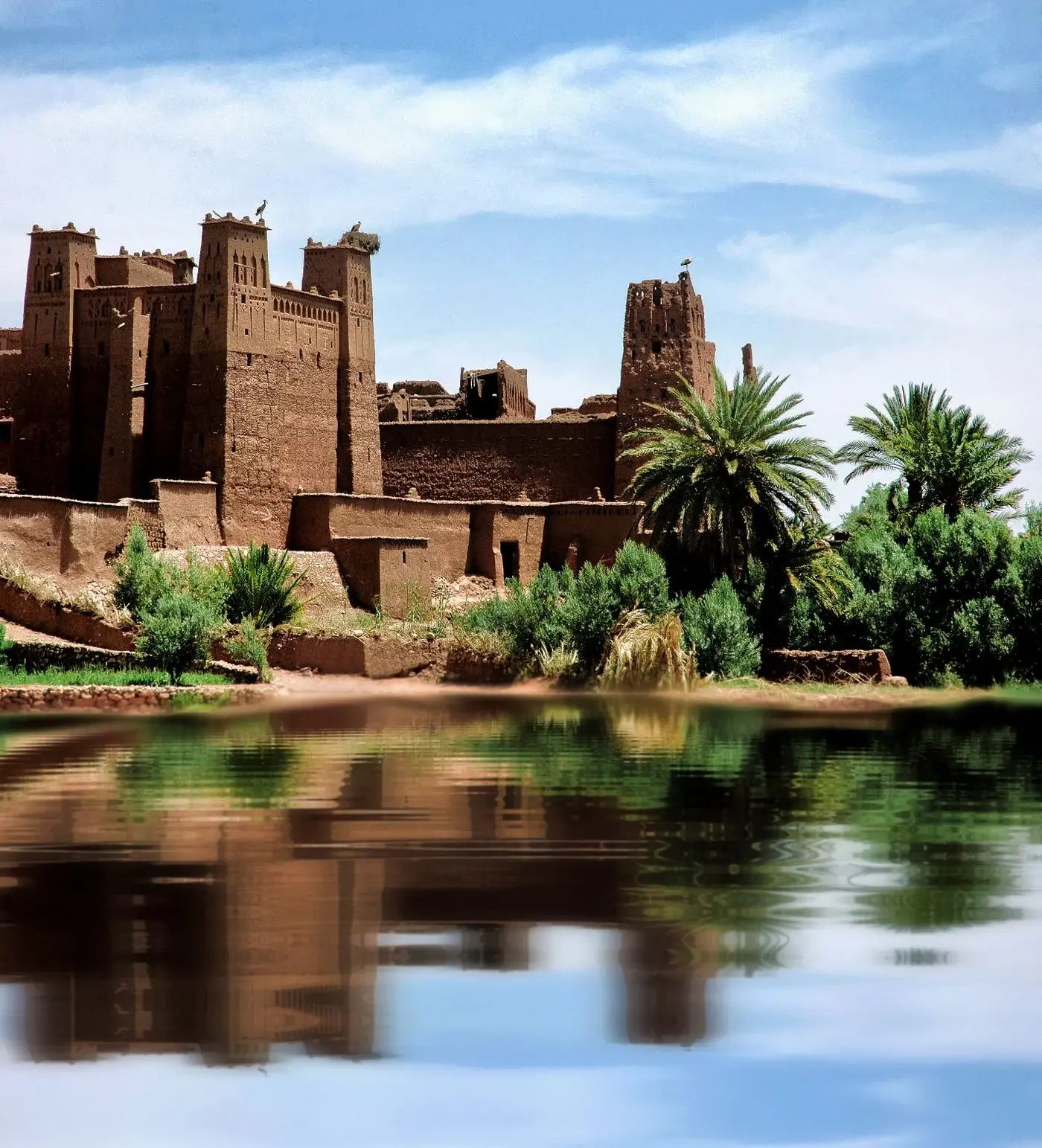
On the southern side, Aït Benhaddou introduces another way of building with the landscape. The fortified ksar rises above its surroundings in a close arrangement of earthen homes, walls and corner towers. During the visit, notice the contrast between the bright open spaces outside and the shade of the narrow lanes. The buildings make more sense when you see them together as a settlement, rather than as a collection of façades. Uneven paths and steps call for comfortable footwear; the extent of the visit follows the shared group’s schedule.
The journey continues by Ouarzazate and east along the Skoura and Rose Valley corridor. Cultivated strips appear wherever water reaches the valley floor, while the land above remains bare and rocky. Watch for the change from scattered palms to the broader valley landscapes around the Dadès area. These stretches are part of the experience of the road; passing through does not imply a separate guided visit to every village or kasbah.
By the time you reach the Dadès area for the first overnight stop, the scenery has changed several times without losing its connection to earth, stone and water. This is a full travel day, with mountain driving, the Aït Benhaddou stop and breaks along the way. The exact accommodation and meal arrangements are provided in your quotation.