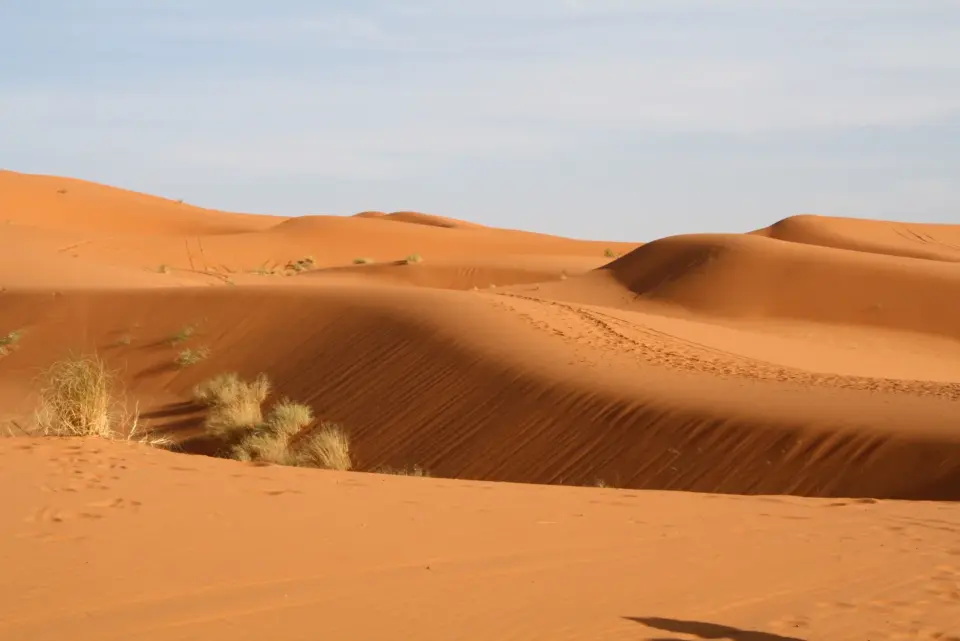

Start with the dunes you want to reach
To experience the large dunes of Merzouga or Erg Chigaga and spend a night in the desert, we recommend at least three days from Marrakech. Four days usually give you more time to enjoy the journey. A two-day trip normally heads toward Zagora and camps in the surrounding area, where the landscape differs from those larger dune fields.
The choice is about how you want to spend your days. Three days can give you a varied road journey, an evening among dunes and sunrise before departure. If you want a full morning to walk, a quiet lunch and another evening in the same desert setting, look for two nights near the dunes.
Before comparing prices, locate every overnight stop on the proposed route. A night in a valley on the approach is part of the journey, but it is not a second night in the desert. The comparison below shows what each duration can offer; the detailed itinerary determines the actual stops and services.
| Duration | Route to consider | Nights away | Best fit |
|---|---|---|---|
| 2 days | Zagora area; return to Marrakech | 1 | An introduction to the south; substantial driving |
| 3 days | Merzouga or Chigaga; check the exact route | 2, often one at the dunes | An evening and sunrise at the dunes |
| 4 days | A second dune night OR a return stop | 3; locations depend on the design | More dune time OR better-divided road stages |
How the nights shape the journey
A three-day Merzouga journey often spends its first night in the Dadès or Tinghir area. You arrive among rock formations, villages and cultivated valley floors, with the sand still ahead. The second night is near Erg Chebbi. This gives the trip two different settings: a southern valley evening followed by the dunes.
For Chigaga, an overnight at Agdz places you beside the Drâa oasis corridor before the onward journey through Zagora and M’Hamid. The following night can be at the dune camp. The valley is part of the experience, with palm groves and earth-built settlements that explain how people have lived along the southern route.
With four days, check where the third night falls. Staying near the dunes creates a day without a long onward transfer. Staying on the return road makes room for another place and changes the final driving stage. Ask to see both options if you are unsure which matters more.
Two days toward Zagora: an introduction to the south
The road leaves Marrakech, climbs into the High Atlas and crosses toward Ouarzazate before reaching the Draa corridor. This is already a substantial journey. Mountains, earth-built settlements and palms form successive landscapes; the interest begins well before any camel ride or camp arrival. A purposeful stop at Aït Ben Haddou can give the road a cultural center, but the available time must be shared with the onward drive.
The Zagora area suits travelers who want one night away and understand the landscape they are choosing. Camps sold under the name Zagora can be in different surrounding locations. Ask for the actual place, its access and photographs of the landscape. Do not assume the towering dunes associated with Erg Chebbi, or the remote Chigaga dune field, are part of a two-day Zagora booking.
The second day returns across much of the same distance. That leaves limited time for lengthy village walks or additional interior visits. Choose this format because an introduction to the Draa region fits your holiday, not because a low day count makes it a relaxed excursion. If you want less driving, consider nearby Agafay or give the southern route another day.
Three days to Merzouga: a road journey with one dune night
Merzouga is the gateway to Erg Chebbi. A common three-day pattern travels through the High Atlas and Aït Ben Haddou, continues to an overnight in the Dadès or Tinghir area, then reaches the dunes on the second day. The sequence matters: the first evening belongs to the valleys, while the second is the desert evening. These are complementary parts of the south, not two nights in the same setting.
The approach can include the Todra gorge, where high rock walls frame a very different landscape from the sand ahead. Make sure any advertised walk has actual time allocated to it. A list containing a gorge, several villages, a museum and multiple workshops does not tell you whether you will experience them or simply pass their entrances.
At Erg Chebbi, the practical question is your arrival window. If the included program uses a sunset camel ride or another camp transfer, the road day needs to leave time for that arrangement. The next morning usually involves leaving the camp and starting the long return. Three days can work well for travelers who value the changing scenery and accept that the camp stay is concentrated around evening and early morning. It is less suitable if your main objective is an entire day among dunes.
Three days to Erg Chigaga: the approach is part of the choice
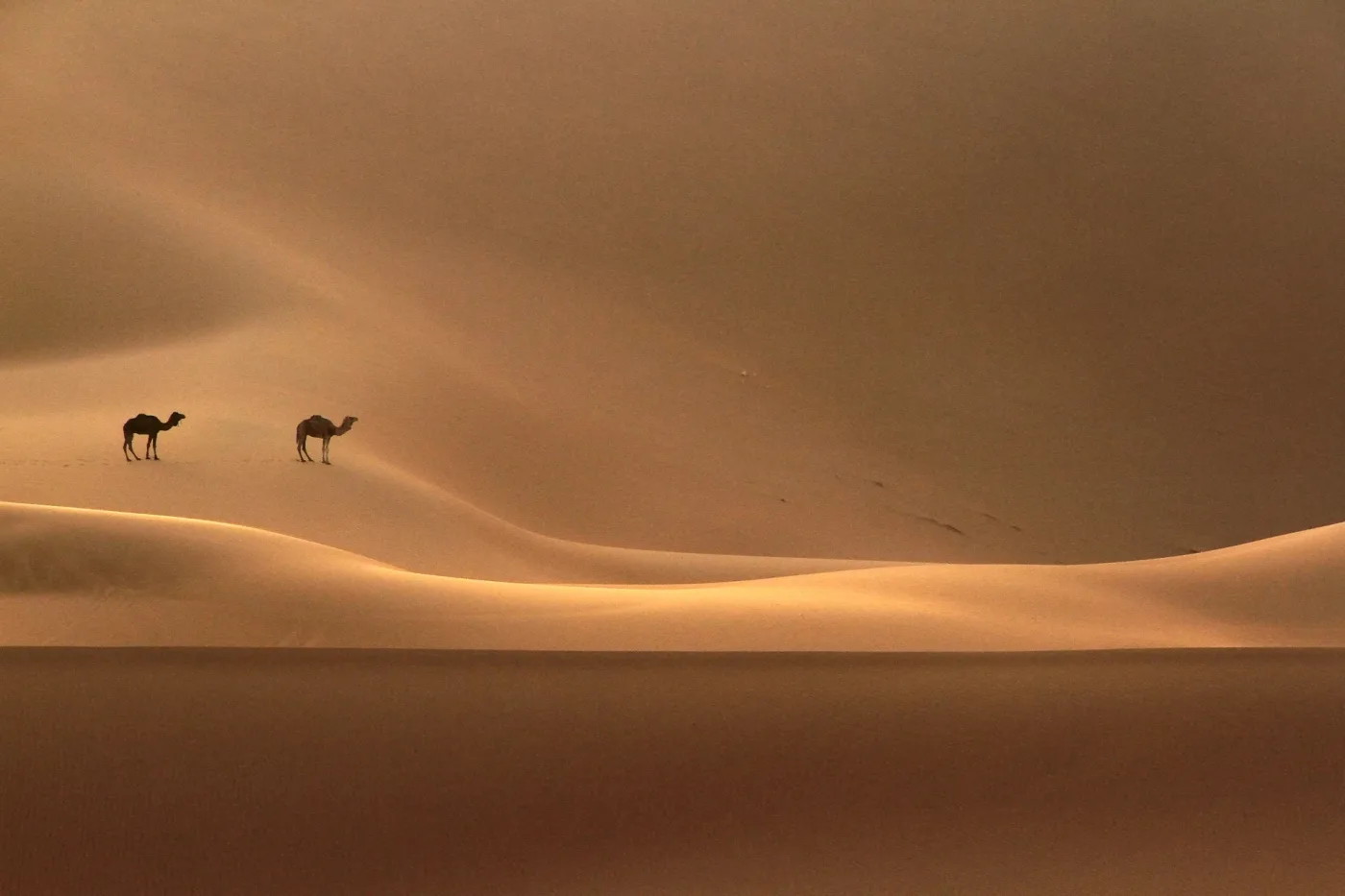
Jamou · Wikimedia Commons · CC BY 3.0 · Image adapted.

Erg Chigaga is reached through a different southern corridor. From the Ouarzazate side, the route continues toward Agdz, the Draa Valley, Zagora and M’Hamid. Beyond M’Hamid, the journey to the dune field uses desert tracks and a suitable 4×4 arrangement. The different approach is a reason to choose Chigaga if the Drâa Valley and a desert-track crossing appeal to you.
Agdz offers an oasis setting for a first night, while Tamegroute and M’Hamid can add meaningful cultural stops when included in the actual plan. The landscape beyond the paved approach includes open stony ground as well as sand. Seeing that transition helps explain the desert as a region rather than imagining an uninterrupted dune sea from Marrakech onward.
Three days remain compact. A return through the Iriki and Foum Zguid side may form a loop when conditions and the program permit, but it still leads to a long journey back across the south and Atlas. Do not interpret a different return line as a short return. For the existing route-specific discussion, read our guide to a shared Chigaga journey via Agdz. The article describes the stops along that particular route.
Two ways to use a fourth day
For more time at Erg Chebbi, a possible four-day arrangement is: a first night in the Dadès or Tinghir area, then two nights near Merzouga. The middle desert day can include a walk at a suitable hour, time to rest and any agreed local visits. You have another evening in the same landscape instead of leaving immediately after the first sunrise. This arrangement still leaves a long return to Marrakech.
For a different road rhythm, a four-day proposal might keep one night near Merzouga and place the final night in the Ouarzazate or Skoura area. The westward journey is then split across two days. Skoura adds an oasis setting; Ouarzazate makes a practical base before the Atlas crossing. Exact stops and visiting time depend on the route chosen.
At Chigaga, a second camp night gives you a desert morning without packing for the exit. An extra night on the approach or return instead makes room for a valley or town. Decide whether you want to stay longer in one place or travel in shorter stages, then let that priority guide the fourth day. These are planning examples, not a fixed package or a promise of particular activities.
Driving time: count the whole day, not only the road estimate
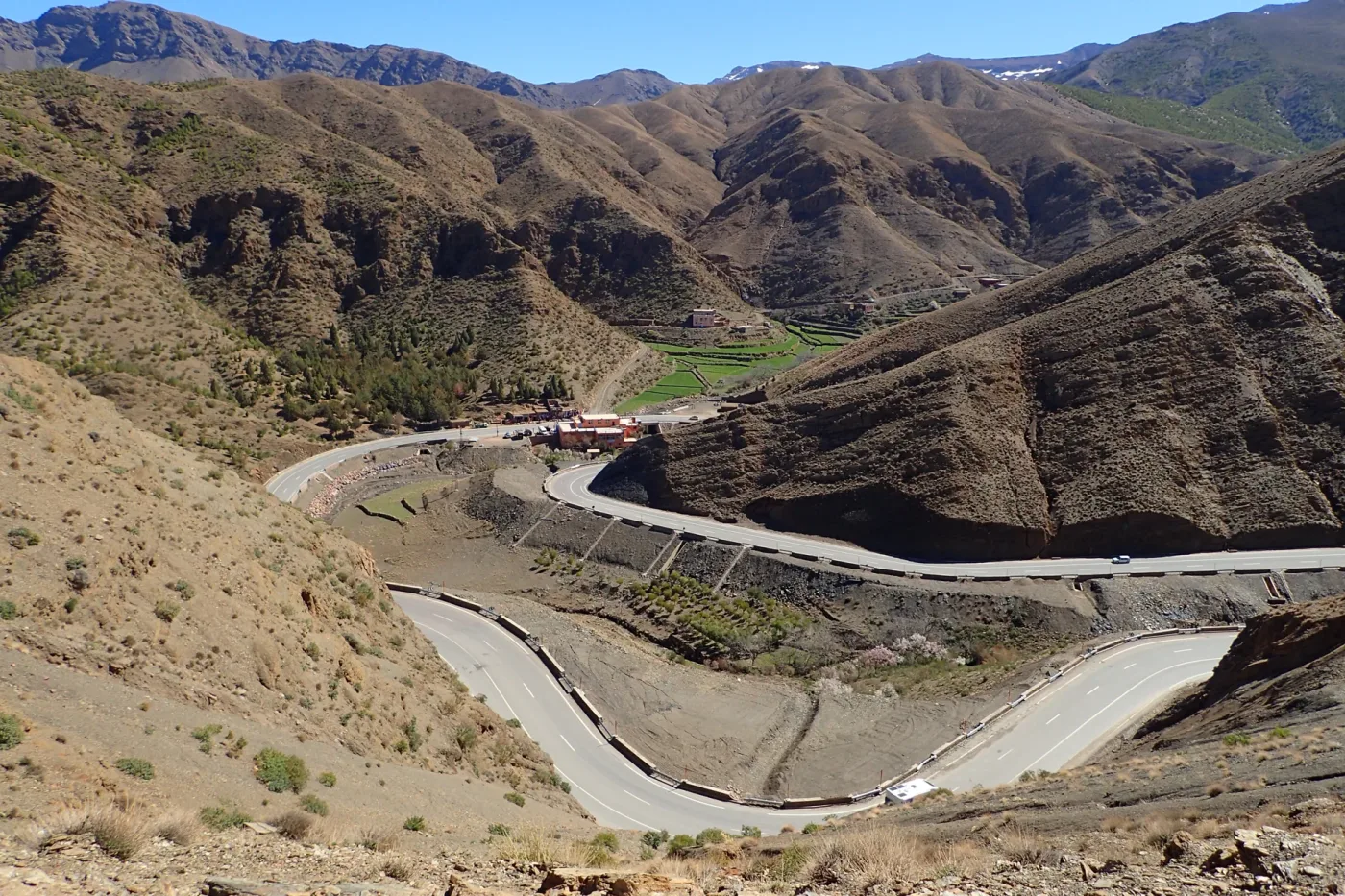
Krzysztof Ziarnek, Kenraiz · Wikimedia Commons · CC BY-SA 4.0 · Image adapted.
_kz03.jpg)
As broad planning allowances, a Marrakech–Zagora road stage can take roughly seven to eight hours of driving, while a direct Marrakech–Merzouga return stage may require around nine to eleven hours before substantial sightseeing. These are approximate ranges, not departure-day guarantees. The exact start, camp access, traffic, road works, mountain weather and chosen road all affect the total.
For Chigaga, separate the paved-road stage from the off-road approach and exit. A camp described as being near M’Hamid may still require a significant track transfer. Ordinary map estimates do not capture every camp access or the pauses needed during a desert crossing. Ask for approximate door-to-door timings for each day, including lunch, comfort breaks and the main visit.
An eight-hour driving day becomes longer once the group stops to eat and explore. That does not make it a bad day, but it changes what you can arrange afterward. Keep the final Marrakech evening flexible and sleep in the city before a flight when possible. An early flight requires a separate plan; it should not depend on a long return from the dunes that day.
What to make time for between Marrakech and the dunes
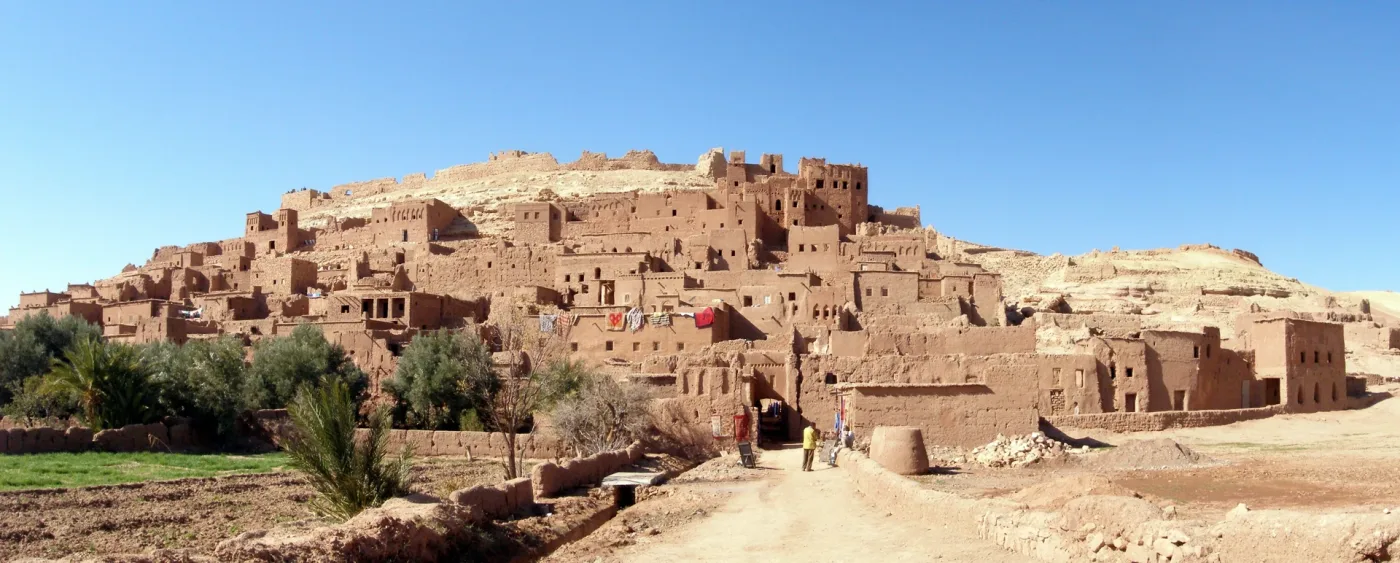
China Crisis · Wikimedia Commons · CC BY-SA 2.5 · Image adapted.

At Aït Ben Haddou, the rewarding part is walking between the earth-built houses and seeing how lanes and towers fit the hillside. The view across the settlement gives you its outline; entering the lanes reveals the textures and scale. The UNESCO World Heritage entry explains its architectural importance. Allow time for the walk you want to do, including any uneven ground or climb.
On the Merzouga approach, Dadès and Todra offer two different ways to experience the valleys. A road through the Dadès landscape reveals how villages and fields follow the valley floor. At Todra, walking beneath the rock walls lets you appreciate the scale that a photograph taken from the vehicle misses. A longer stay can make these places a destination in their own right.
The Chigaga approach follows the Drâa corridor instead. Around Agdz, palm groves and earth-built villages sit against dry slopes. Farther south, a scheduled Tamegroute workshop visit can show the craft behind the green ceramics before the journey continues toward M’Hamid. Choose the visits that interest you and give them enough time. Respect private doorways and cultivated land, and ask before photographing people.
Agafay and an onward finish in Fes: two useful alternatives
Agafay is the option to consider when your holiday cannot absorb several southern road days. Its appeal is a rocky desert landscape near Marrakech, with experiences offered by individual operators and camps. It is not a substitute location for the large Saharan dune fields. Choose it for a nearby evening or overnight on its own terms, rather than expecting Merzouga scenery within a short city transfer.
An onward finish in Fes solves a different problem. If your wider trip already includes both cities, a route through Merzouga can connect them instead of returning you to Marrakech. The final journey toward Fes remains substantial, but it puts the driving in the direction of your next destination. It does not remove the need to assess the daily distances.
Look at the whole holiday before choosing. A desert trip that returns to Marrakech may be convenient for a round-trip flight, while an onward itinerary can fit an open-jaw journey. Neither is universally better. Count the nights available between arrival and departure, allow time for Marrakech itself, and avoid booking a tour whose finish forces an immediate cross-country transfer to recover your original plan.
Match the duration to your companions and the season
For families, the number of hours between useful breaks matters as much as the number of nights. Four days can help when the itinerary genuinely shortens road stages, but a second camp night alone does not guarantee that benefit. Discuss ages, walking preferences, suitable restraints and any essential accommodation needs with the organizer. Do not assume a vehicle category or a camp label answers those questions.
Travelers interested in photography often appreciate a second dune night because it adds another evening and morning, subject to weather. Those who enjoy architecture may prefer to spend the extra night in an oasis or near an earthen settlement. There is no reason to give everyone the same fourth day.
Spring and autumn are often comfortable periods for desert travel; summer heat and winter night cold require different planning. Mountain conditions can differ sharply from Marrakech and the dunes. Check the forecast and current road advice for your actual dates rather than choosing clothing from a desert photograph. Layers, sun protection, closed walking shoes and a small accessible overnight bag are practical across many departures. Carry water appropriately and follow the local team's advice on walking times and conditions.
Budget and camp comfort: compare the same journey
A three-day shared trip and a four-day private journey cannot be compared by duration alone. Vehicle allocation, group size, rooms, tent facilities, meal arrangements and included visits all affect what you receive. A lower starting price may represent a different camp category or a larger group rather than the same journey sold more efficiently.
Ask for the named overnight locations, the number of nights, bathroom arrangements, room sharing, transport format and included meals. If camel riding is important, check whether it is included, how it fits the schedule and what arrangements apply if you prefer not to ride. Passing through a town does not include every museum, guided visit or entrance ticket in it.
For a fourth day, consider the benefit alongside the additional accommodation and operating cost. Paying more to split a difficult return may be worthwhile even if you see fewer new attractions. Equally, choosing three days can be sensible if you enjoy road travel and have understood its pace. For a useful quote, give your dates and traveler numbers and ask for the same accommodation and transport standard in each option. The official Merzouga regional guide is a useful starting point for destination context.
Choose the day you most want to enjoy
Picture the part of the journey you would most regret rushing. It might be walking through Aït Ben Haddou, arriving at the dunes with daylight to spare, or spending a whole morning in the desert. Tell the planner that first. It is a more useful starting point than requesting as many stops as possible.
Then check the practical fit: every overnight location, the longest driving stage and the final city. For a short holiday, keep time for Marrakech itself. If you continue to Fes, make sure the tour ends there; if you fly from Marrakech, leave a workable night before departure.
Send Morocco Tours Marrakech your dates, traveler numbers and preferred desert region through our trip-planning contact page. Tell us whether your extra day should go to the dunes, the valleys or a gentler return. We can use those priorities to discuss a route that fits your holiday.