What “the real Morocco” should mean — and what it should not
The phrase “real Morocco” is often used as a marketing shortcut, as if one village, one desert camp or one style of travel were more legitimate than the rest of the country. That is not how we use it. Casablanca is real Morocco. Marrakech is real Morocco. A family apartment in Rabat, a workshop in Fes, a mountain village, a roadside café, Essaouira’s fishing port and a desert bivouac are all parts of the same country.
What changes is how much context a traveler receives. A rushed tour can show famous places without explaining how the regions connect. A stronger private journey leaves enough time to notice the transition from Atlantic cities to the Rif, from Fes to the Ziz Valley, or from Marrakech over the High Atlas toward the kasbah country and the Sahara.
For DesertBrise, a more meaningful Morocco trip is therefore not about promising “hidden” places or staged encounters. It is about honest route design, appropriate local guides, realistic driving days and enough free time for a place to feel like more than a photo stop.
Private tours are useful when they create flexibility, not when they simply add a private car
A private Morocco tour is valuable because the route can respond to the traveler. A family with young children should not have the same medina schedule as two photographers. A couple interested in quiet riads and the desert needs different pacing from a group that wants hiking. Travelers arriving after an overnight flight may need a soft first afternoon rather than a full sightseeing program.
The practical questions matter: where does the driver sleep, how long is each transfer, which visits require a licensed local guide, what happens to luggage during a desert camp, and which activities are fixed rather than optional? A private vehicle helps, but it does not make a seven-hour road day disappear. Good planning describes distance honestly.
Before comparing private tours, compare what each day actually contains. Two itineraries can list the same destinations and feel completely different because one allows a full morning in Fes and the other reaches the medina after hours on the road. Privacy is useful; pacing is what makes it valuable.
Marrakech is a gateway, but it should not stand in for the whole country

Marrakech is a natural starting point for many journeys because flights, riads and road connections make it practical. It can also be intense: scooters, souks, guided groups, restaurants, rooftops and constant movement share a relatively compact historic center. Give it enough time to orient yourself before adding long day trips.
The city makes geographic sense before the High Atlas, Aït Ben Haddou, Ouarzazate, the Draa Valley and M’Hamid. It also connects easily with Essaouira on the Atlantic. What makes less sense is using Marrakech as a base for repeated very long return trips simply so that every night remains in the same hotel.
The UNESCO listing for the Medina of Marrakesh is useful background for understanding why the historic center matters beyond shopping. On the ground, combine that history with unstructured time: one evening around Jemaa el-Fna can be enough if the next morning begins early; another traveler may want three nights to explore at a slower pace.
The High Atlas should be treated as a region, not just a road obstacle
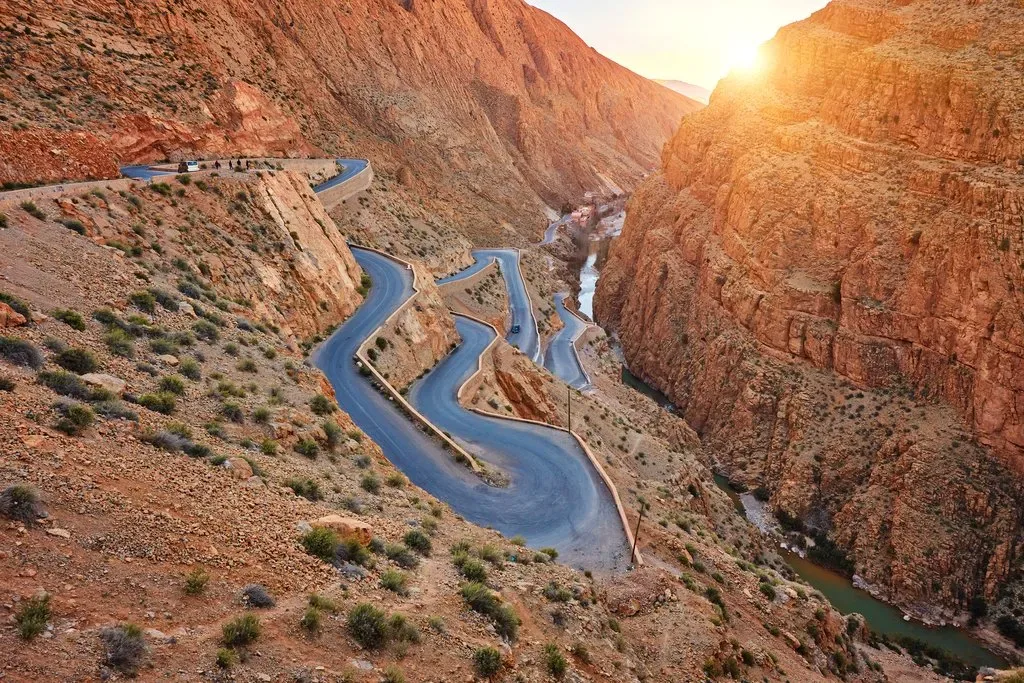
The High Atlas is often crossed quickly on the way south, yet the mountains explain a great deal about Morocco’s geography. Valleys, irrigated terraces, villages and seasonal weather shape life here very differently from the plains or desert fringe. A traveler who only photographs a pass misses that context.
For a first trip, the mountains can be experienced in several ways: a day walk from a village base, two or three nights of hiking, or simply a slower crossing with time for viewpoints and a proper stop. A summit objective such as Toubkal is a separate mountain plan that should match season, fitness and current local arrangements; it should not be added casually to a standard sightseeing tour.
Mountain weather also affects packing. Morocco’s national tourism office notes substantial climatic variation by region and season; its official climate and seasons guidance is a useful starting point. Short-term forecasts and advice from local mountain professionals are more important when a route involves significant walking.
Aït Ben Haddou and the south are most interesting when the road is allowed to tell a story
After the Atlas, southern Morocco changes in color, architecture and scale. Aït Ben Haddou, Ouarzazate, Skoura, Dadès, Tinghir and the Draa Valley should not become a string of five-minute photography stops. Choose the places that fit your route and give them enough time.
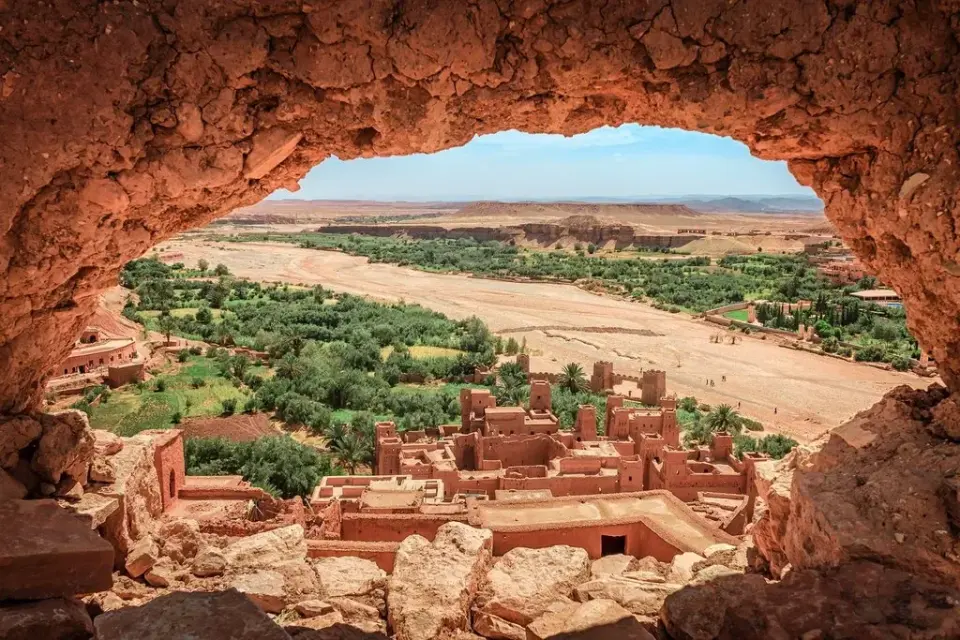
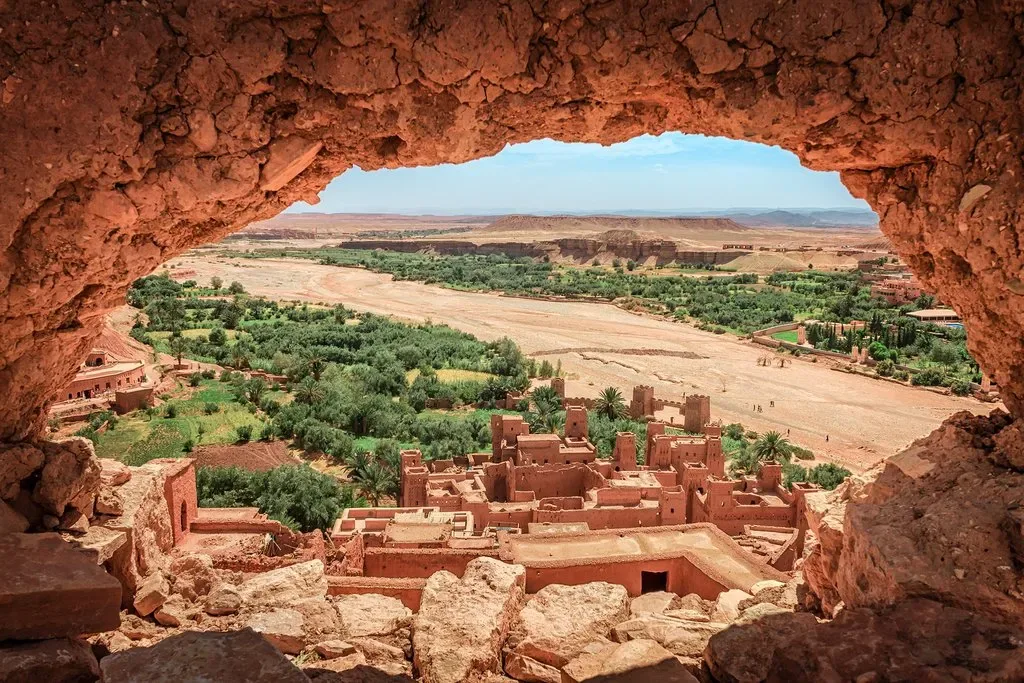
Aït Ben Haddou is a good example. Its importance is the ksar’s earthen architecture and settlement form, not only its association with film productions. The UNESCO Ksar of Ait-Ben-Haddou listing provides useful historical context. A walking visit is much more informative than a roadside photo.
On a private route, a driver can adjust small stops to energy and weather, but major guided visits should be confirmed in advance. This is where honest programs differ from brochure language: a possibility is presented as a possibility, not as a guaranteed encounter.
Desert tour or desert trek: decide what you actually want to do
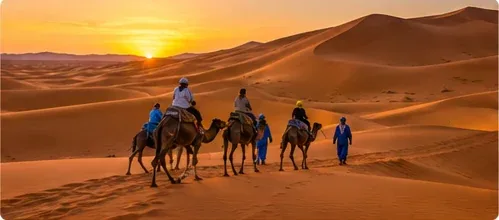
The words “Sahara tour” cover very different experiences. A classic desert stay may involve driving to the dune region, a short camel ride, sunset, dinner and one night in camp. That can be a good choice when time is limited or when comfort matters more than walking.
A desert trek is built around movement on foot. The day is organized around temperature, shade, water, terrain and camp. The experience is less about reaching one famous dune and more about the rhythm between walking and resting. For travelers who enjoy hiking and simplicity, that difference is central.
Neither format is automatically more authentic. A comfortable camp can be well run and locally grounded; a poorly organized trek can be exhausting. Ask about daily walking time, sleeping arrangements, luggage support, food, water, vehicle backup and guide experience before choosing.
M’Hamid, Erg Chigaga and Merzouga belong to different route logics
Merzouga and Erg Chebbi fit naturally into itineraries connecting Fes with the Ziz Valley and the southern valleys. The dunes are accessible, accommodation options are broad and the region works well for travelers who want a classic Sahara image without a multi-day trek.
M’Hamid and Erg Chigaga fit better with a southern route from Marrakech through Ouarzazate and the Draa Valley. Reaching the deeper desert requires more time and sometimes 4x4 support. That extra distance is exactly why many trekkers prefer it: the transition into the Sahara becomes part of the journey.
Choose according to route, available days and activity level rather than online popularity. A traveler heading from Marrakech to Fes may find Erg Chebbi efficient; a traveler focused on walking and southern Morocco may get more from M’Hamid. The correct answer depends on the whole itinerary.
Fes rewards travelers who want historical depth
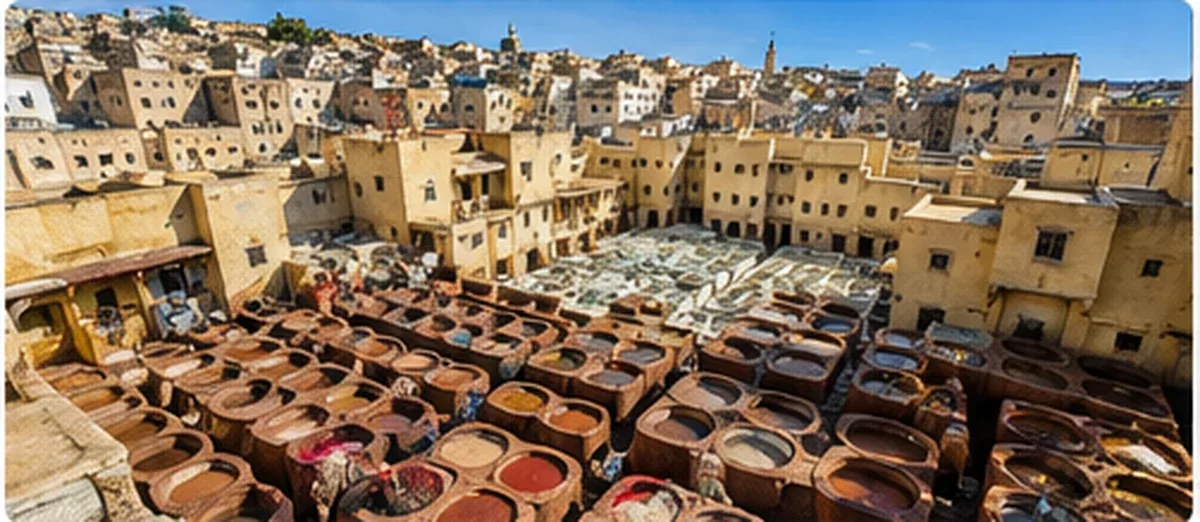
Fes is one of the places where a licensed local guide can materially improve a visit. The old city is not merely difficult to navigate; it is difficult to interpret without context. Craft districts, religious buildings, fondouks, markets and residential lanes form a historic urban system rather than a collection of independent sights.
UNESCO describes the Medina of Fez as one of the most extensive and best-conserved historic towns of the Arab-Muslim world. Give the city a full guided day, then keep some independent time if your itinerary allows. The second period is often when travelers return to the craft, food or architecture that interested them most.
Fes also makes a strong geographic transition toward the Sahara. The road through the Middle Atlas and Ziz Valley is long, but it creates a logical change in landscape. Treat it as a genuine travel day rather than pretending the desert is nearby.
Chefchaouen and northern Morocco are worth including when the route supports them

Chefchaouen is visually distinctive, but the strongest reason to include northern Morocco is not simply the blue walls. The Rif, Tangier, Tetouan, Rabat and the north’s food and coastal history add a different regional identity to a longer trip.
On a short Marrakech-and-desert holiday, Chefchaouen can create too much distance. On a 12- to 16-day route beginning in Casablanca or Tangier, it fits much more naturally before Fes. This is one of the clearest examples of why a private itinerary should start with geography rather than a wish list.
Two nights usually give Chefchaouen a comfortable rhythm: arrival, an unhurried morning, time toward Ras El Maa or a viewpoint, and a relaxed departure. More time is useful for hiking; less time turns the town into a quick photograph.
Essaouira changes the pace without needing a long activity list
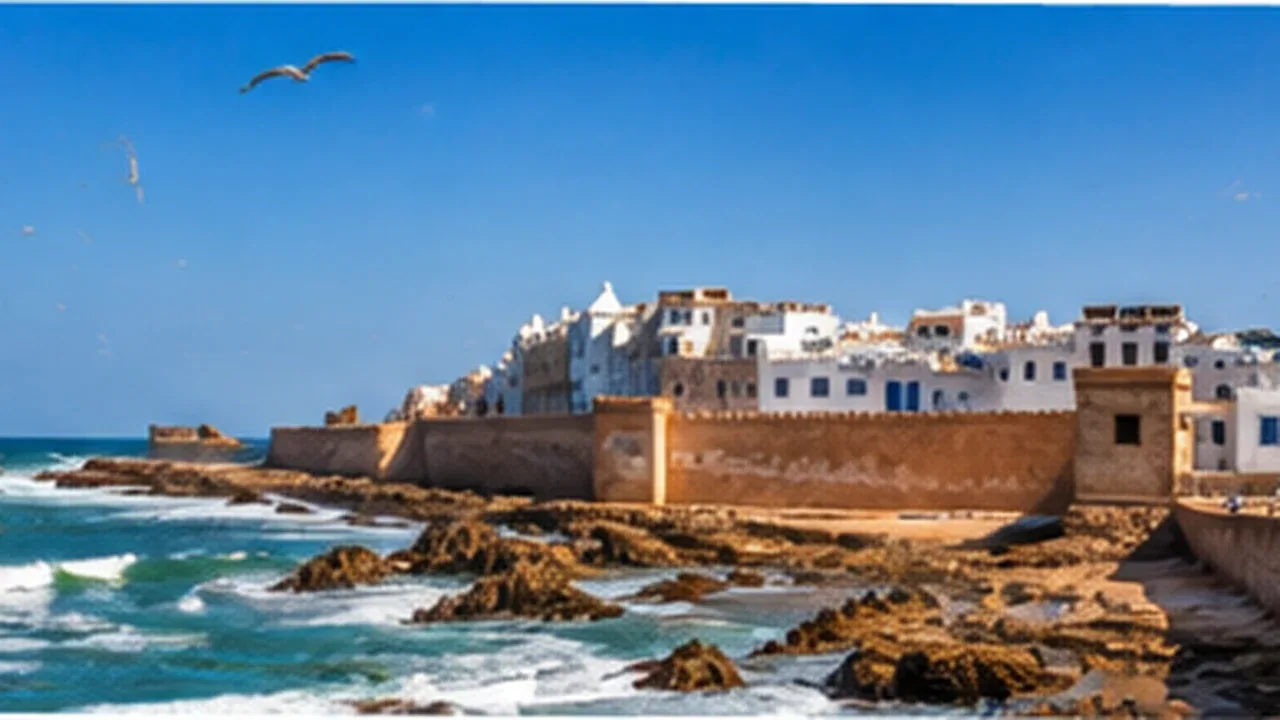
Essaouira works especially well near the end of a Marrakech-centered trip because the Atlantic air, harbor and smaller medina provide a clear contrast to the interior. Two nights can be enough for the port, ramparts, medina, beach and long meals without turning every hour into an organized activity.
The UNESCO listing for the Medina of Essaouira explains its importance as a fortified late-18th-century trading town. The city’s value to a modern itinerary is also practical: it can provide a softer final stage after mountain and desert driving.
If your international flight leaves from Marrakech, returning the previous day is usually more robust than depending on a road transfer from Essaouira on the morning of departure. Small logistical choices like this are what make an itinerary feel calm.
Families, couples and active travelers need different versions of Morocco
For families, vehicle time and hotel changes matter more than how many landmarks fit on the map. Children often enjoy open desert, animals, pools and short interactive visits more than long sequences of monuments. A family route should protect meal times, rest and flexibility.
For couples, privacy comes from the details: room type, camp layout, how crowded the restaurant is, and whether a day has free time. Romantic marketing does not create a romantic journey if the itinerary begins before sunrise every day or reaches each hotel exhausted.
For active travelers, the opposite mistake is common: adding too many demanding days without recovery. A mountain trek followed immediately by a desert trek may need a transition day. Private planning should adapt to the body as well as the map.
What to ask before booking a private Morocco tour
Ask for the approximate driving time each day, not only the destination names. Ask which guides are included, which monument tickets are included, the exact accommodation category, the desert camp location, meal basis, airport transfers and whether a 4x4 transfer is necessary.
Ask what happens if you want to slow a day down. Some visits have fixed reservations; others can be shortened or moved. Understanding that flexibility before paying a deposit prevents misunderstandings later.
Finally, ask what is not included. A trustworthy quotation should make exclusions visible instead of relying on travelers to discover them on the road. The cheapest headline price and the best-value itinerary are not always the same thing.
How DesertBrise approaches route design
We start with the traveler’s dates, arrival airport, departure airport and two or three priorities. Then we build the route around geography. We do not need to include every famous place for the trip to feel complete.
Being from the desert gives our company a close connection with southern Morocco and trekking, but DesertBrise operates across the country. That means the Sahara is not forced into every itinerary. Some travelers need more north, more Atlantic coast, more mountains or more time in cities.
The final test is simple: does each major place have enough time to justify the distance required to reach it? If the answer is no, we remove something. A private Morocco tour should feel more considered than a standard package, not merely more expensive.
The Morocco you remember is usually the one with enough time
The strongest moments on a trip are often ordinary: tea after a long drive, a conversation with a guide, early light in a medina, a quiet section of road or the moment a child sees the desert for the first time. These moments do not need to be promised in advance or turned into products.
Good travel planning creates the conditions for them by leaving space. That is the main difference between a route built for search results and a route built for people.
Morocco has famous places for good reasons. Visit them. But connect them with honest distances, local context and enough breathing room, and the country becomes far more than a checklist.
Test the rhythm across the whole week before you book
Do not judge an itinerary only by its single longest drive. Three heavy transfer days close together are much more tiring than one substantial crossing followed by a full day in place. Ask for likely arrival times as well as approximate hours on the road.
Count hotel changes. A long trip with too many one-night stops means luggage is always packed and evenings are spent checking in. Two-night stays after major transfers often improve the journey more than adding another destination.
Protect the final day before an international flight. A last night in the departure city is usually more robust than relying on a multi-hour road transfer on the morning of the flight.
Riads, hotels and desert camps solve different travel needs
A historic riad can be beautiful but may sit several minutes on foot from the vehicle drop-off inside a medina. That is fine for many travelers and less convenient for some families, mobility needs or very late arrivals.
In the Sahara, ask how many tents a camp has, where it is located, what bathroom arrangement it offers and how luggage is transferred. Winter bedding and heating options can matter more than decorative labels.
The best accommodation is therefore not automatically the most expensive. It is the one that fits the day, traveler and expected level of comfort.