Day 1
Day 1 — Casablanca: Arrive with Space to Settle In
Meals: No meals unless arranged
Included: Airport transfer and optional city orientation
Casablanca is the meeting point, not a test of how much sightseeing can fit after a flight. Your driver meets you at the agreed airport or city location and helps you settle in. If arrival time genuinely leaves room, the Hassan II Mosque or a short Atlantic walk can offer a first sense of the city; otherwise, rest takes priority.
Keeping the opening evening light matters on a route this long. A relaxed meal or mint tea is enough to mark the start before the journey turns north the following morning.
Day 2
Day 2 — Casablanca to Chefchaouen via Rabat: From Atlantic Capital to the Rif
Meals: Breakfast
Included: Private transport and planned visits
The road first reaches Rabat, where the Hassan Tower, Mohammed V Mausoleum and the Kasbah of the Oudayas can be visited according to opening times. The capital feels measured and open, a useful contrast to the denser medinas that come later.
North of Rabat the landscape gradually tightens toward the Rif. By the time Chefchaouen appears against the mountains, the day has moved through two very different versions of Morocco. Arrival is kept simple so there is energy for the blue medina tomorrow.
Day 3
Day 3 — Chefchaouen: Let the Blue City Slow You Down
Meals: Breakfast
Included: Accommodation, local assistance and optional guided discovery
Chefchaouen rewards wandering more than a hurried checklist. The medina’s steep lanes, small squares, craft shops and blue-washed walls unfold naturally on foot, with time to stop rather than chasing every viewpoint. An outing toward Akchour can be considered when trail, weather and the confirmed programme support it.
Staying a second night changes the experience. Late afternoon and early morning are quieter, and the town feels less like a photo stop and more like a mountain community with its own rhythm.
Day 4
Day 4 — Chefchaouen to Fes: Roman Ruins, Sacred Hills and Imperial Walls
Meals: Breakfast
Included: Private transport and planned visits
Leaving the Rif, the route opens toward Volubilis, where mosaics and columns sit in farmland rather than inside a modern city. Moulay Idriss adds a living religious setting nearby, while Meknes brings the monumental scale of an imperial capital.
These stops make the road to Fes a historical progression rather than a transfer. The medina itself is saved for tomorrow; after arrival, a calm evening is more useful than entering one of Morocco’s most complex old cities when tired.
Day 5
Day 5 — Fes: Learning to Read a Living Medina
Meals: Breakfast
Included: Private transport and planned visits
A licensed local guide helps make Fes el-Bali understandable. Workshops, markets, religious institutions, fountains and homes still share the same dense urban fabric, and the value of the day comes from seeing how those pieces connect. Visits may include major medina landmarks and craft areas according to access and opening rules.
There is time for artisanship and food as well as history. Fes should feel inhabited, not staged: leather, metal, wood, bread ovens and narrow commercial streets are part of daily life, not background decoration.
Day 6
Day 6 — Fes to Merzouga: Watching Morocco Dry into Desert
Meals: Breakfast
Included: Private transport and planned visits
This is a long road day, and it is described honestly. The route crosses the Middle Atlas, passes cedar country and higher plateaus, then drops toward the Ziz Valley where palms cut a green line through increasingly arid land. Useful stops break the distance without turning it into an overloaded sightseeing day.
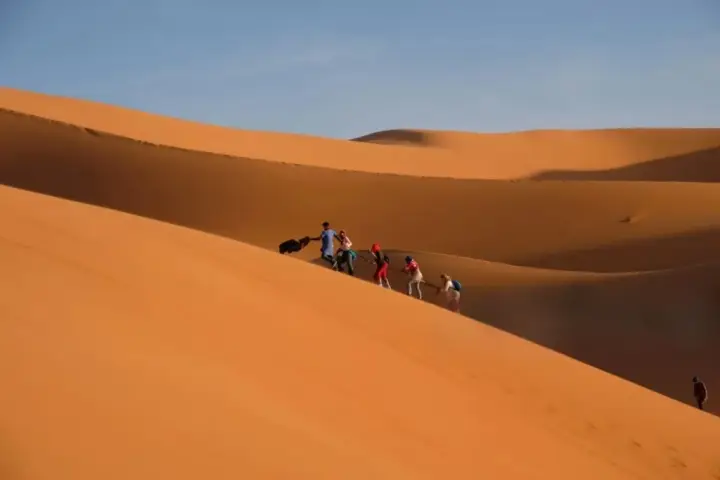
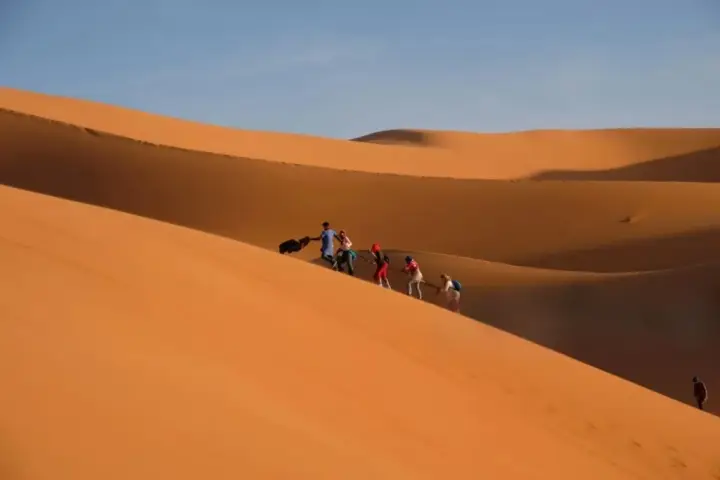
Erg Chebbi appears late in the journey south. Arrival in Merzouga is deliberately unhurried: tea, a short walk and the first view of the dunes are enough after many hours on the road.
Day 7
Day 7 — Erg Chebbi: Give the Sahara a Full Day
Meals: Breakfast and dinner
Included: Camp stay and desert activities as arranged
The Sahara is allowed to occupy the whole day. Depending on the confirmed programme, the route around Erg Chebbi can include Khamlia and its musical tradition, desert-edge settlements, a 4x4 circuit, dune walking or time near Rissani. None of these needs to be forced simply to fill hours.
Later, camp access can be by camel or 4x4 according to preference, mobility and the booked arrangement. Reaching camp with time to settle is more important than promising a perfect sunset; weather and light remain outside anyone’s control.
Day 8
Day 8 — Merzouga to Ait Ben Haddou: Leaving the Dunes for Kasbah Country
Meals: Breakfast
Included: Private transport and planned visits
The dunes recede as the road turns west through Rissani and the southern interior. Palm valleys, dry plateaus and settlements along the old caravan corridor show how the Sahara connects with inhabited Morocco. The Draa landscapes and Ouarzazate region create a gradual transition rather than an abrupt return to the cities.
By the time Ait Ben Haddou rises from the earth-toned valley, the architecture feels tied to the landscape just crossed. The evening is kept around the ksar area so the day finishes in the south, not after another unnecessary drive.
Day 9
Day 9 — Ait Ben Haddou to Marrakech: Across the High Atlas
Meals: Breakfast
Included: Private transport and planned visits
Ait Ben Haddou is best experienced on foot before the mountain crossing. Its earthen lanes and fortified form make more sense when there is time to walk rather than stop only for a distant photograph. From here the road climbs into the High Atlas and follows the Tizi n’Tichka route toward Marrakech.
Mountain weather and road conditions set the pace. Viewpoints and breaks are chosen when they fit naturally, and the priority is a safe arrival with enough energy to notice how dramatically Marrakech differs from the valleys left behind.
Day 10
Day 10 — Marrakech: History, Markets and the Logic of the Medina
Meals: Breakfast
Included: Private transport and planned visits
Marrakech gets a proper city day with local context. The medina, souks, Jemaa el-Fna and historic palace areas can be linked on foot so that craftsmanship, trade and architecture form one story rather than separate attractions. Exact entrances depend on the confirmed programme and opening conditions.
The afternoon can slow into a garden, riad courtyard or rooftop when appropriate. After nine days of movement across Morocco, understanding Marrakech matters more than squeezing another name onto the list.
Day 11
Day 11 — Marrakech from the Sky and at the Table, When Confirmed
Meals: Breakfast
Included: Accommodation and selected local experiences as arranged
Travellers who have booked the balloon experience may start before sunrise, subject to weather, operator approval and the final reservation. Those who prefer to stay grounded can begin later without losing anything essential from the city.
Food becomes the stronger theme after the morning: market produce, street flavours or a guided tasting can reveal Marrakech through everyday habits rather than monuments. The combination works because panorama and flavour show two completely different scales of the same place.
Day 12
Day 12 — Marrakech to Essaouira: West through Argan Country
Meals: Breakfast
Included: Private transport and planned visits
The drive west begins in dry inland country and gradually picks up the Atlantic influence. An argan cooperative is visited only if that stop is written into the final plan; the deeper change is geographical, as cooler air and a wider horizon announce the coast.
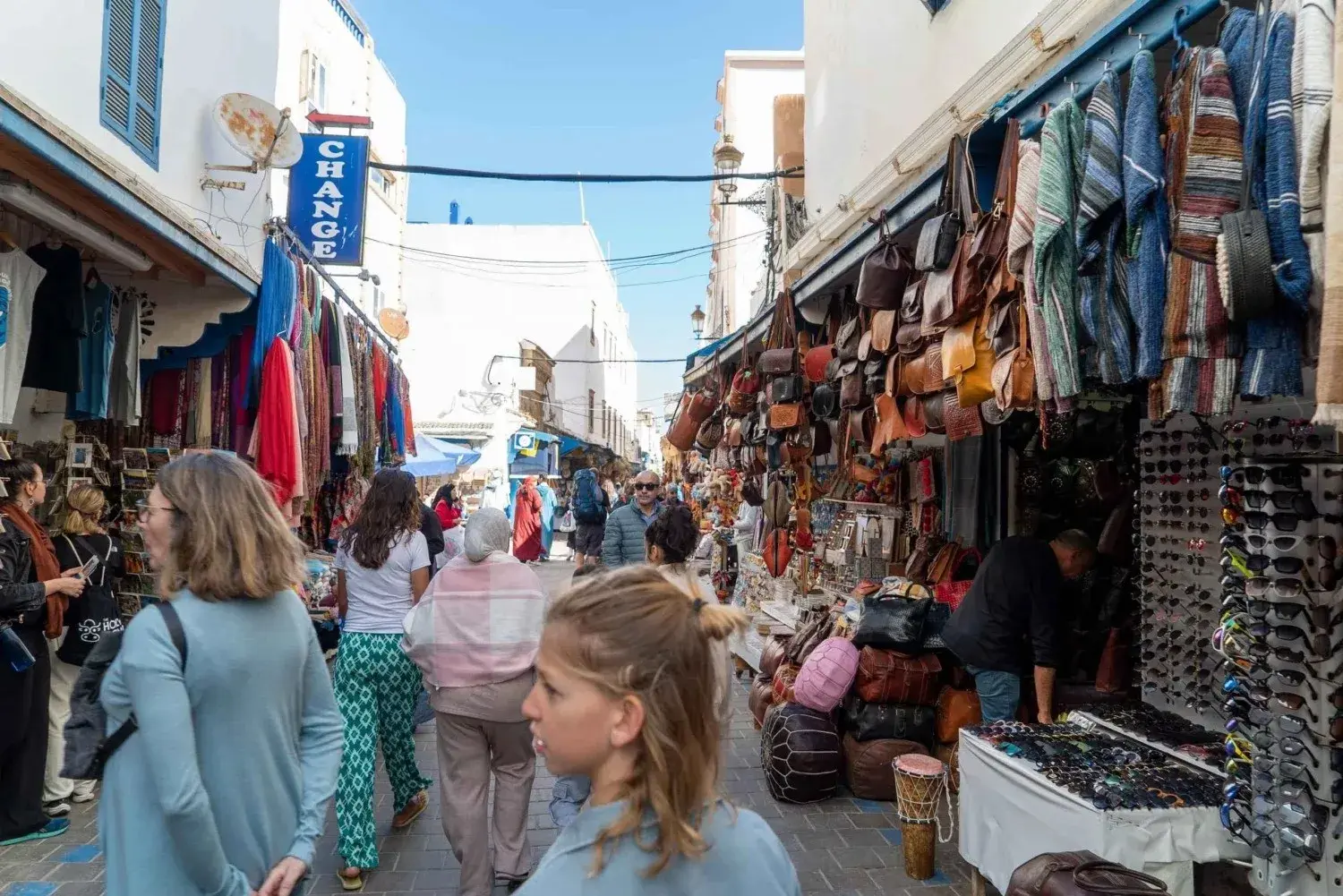
Essaouira feels lighter on arrival. White walls, the working port and ocean wind immediately change the pace after Marrakech, and an early enough arrival leaves room for a first walk without turning the evening into another scheduled tour.
Day 13
Day 13 — Essaouira: A Day with No Need to Hurry
Meals: Breakfast
Included: Private transport and planned visits
Keep the day in Essaouira itself. The fishing harbour, ramparts and medina are close enough to explore on foot, leaving space for seafood, galleries, craft streets or simply watching the Atlantic from the walls. A hammam or spa ritual belongs here only when it has been specifically arranged.
This pause is intentional. After the Rif, Fes, Sahara, Atlas and Marrakech, a slower coastal day lets the journey breathe and gives travellers time to absorb where they have already been.
Day 14
Day 14 — Essaouira: Beach Air and Moroccan Cooking
Meals: Breakfast
Included: Accommodation and selected local experiences as arranged
The morning can stay near the ocean with a long walk or, when booked and suitable, a riding experience on the coast. Wind and sea conditions decide what is sensible; no beach activity is treated as automatic.
Later, a confirmed cooking session moves the attention indoors to ingredients, preparation and shared food. Essaouira’s markets and seafood make the lesson feel connected to the place rather than added as a generic activity.
Day 15
Day 15 — Essaouira to Casablanca: Following the Atlantic North
Meals: Breakfast
Included: Private transport and planned visits
The final road stage follows the Atlantic direction back toward Casablanca. Depending on the confirmed timing, a stop around Safi, El Jadida or Azemmour may be possible, but the day is not built around collecting all three. One worthwhile pause is better than arriving late because the map was overfilled.
The coast accompanies the closing kilometres of the circuit. Reaching Casablanca with margin allows a final dinner and a quiet night before departure rather than ending a sixteen-day journey in a rush.
Day 16
Day 16 — Casablanca: Departure on Your Flight Schedule
Meals: Breakfast
Included: Airport transfer
The final morning belongs to practical departure timing. Breakfast, check-out and the airport transfer are organised around the confirmed flight, with a short local outing or last meal considered only when there is comfortable margin.
There is no need to manufacture one more attraction. The route has already crossed the Atlantic north, Rif, Fes, Sahara, kasbah country, High Atlas, Marrakech and Essaouira; a smooth departure is the right final service.