Day 1
Marrakech → Dades Valley: Across the Atlas into kasbah country
Meals: No meals unless confirmed
Included: Private air-conditioned vehicle with professional local driver
The day begins in Marrakech, then the road gradually carries you toward Dades Valley.
The High Atlas is not empty transfer time. Mountain villages, changing geology and the Tizi n’Tichka road make the crossing part of the story. Aït Ben Haddou is strongest when there is time to walk its earthen lanes and understand the old caravan setting rather than stop only for a photograph. Dadès brings sculpted rock, kasbah villages and a lived-in valley where southern Morocco feels agricultural as well as dramatic.
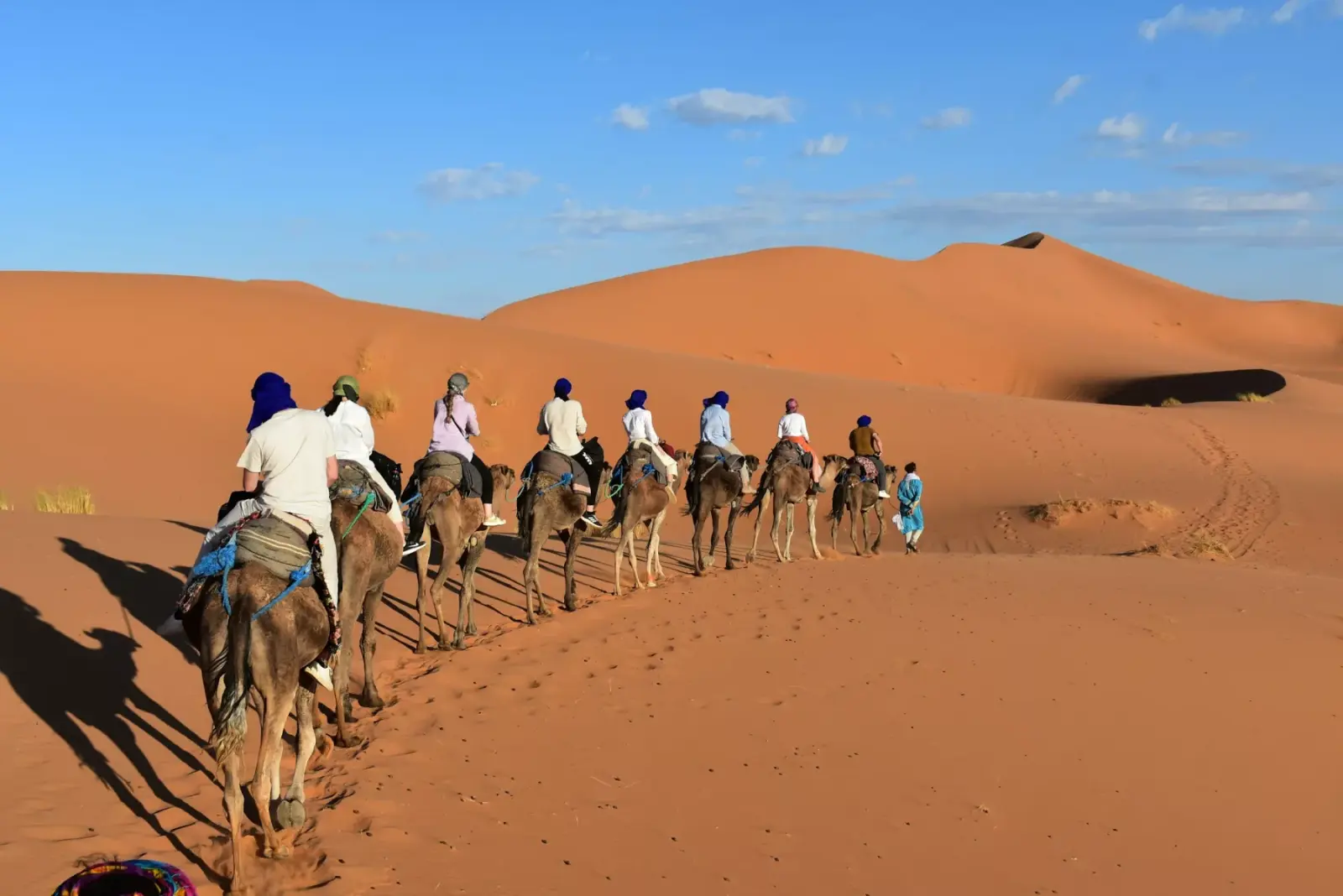
The desert is given time of its own. We avoid reducing it to a quick camel photo and leave space for sunset, camp life and the silence that makes the Sahara memorable. The pace stays flexible, with stops chosen for the people travelling rather than a rigid coach schedule.
Day 2
Dades Valley → Merzouga: Canyon walls before the dunes
Meals: Breakfast
Included: Private air-conditioned vehicle with professional local driver
Leave Dades Valley behind and let the scenery change on the way to Merzouga.
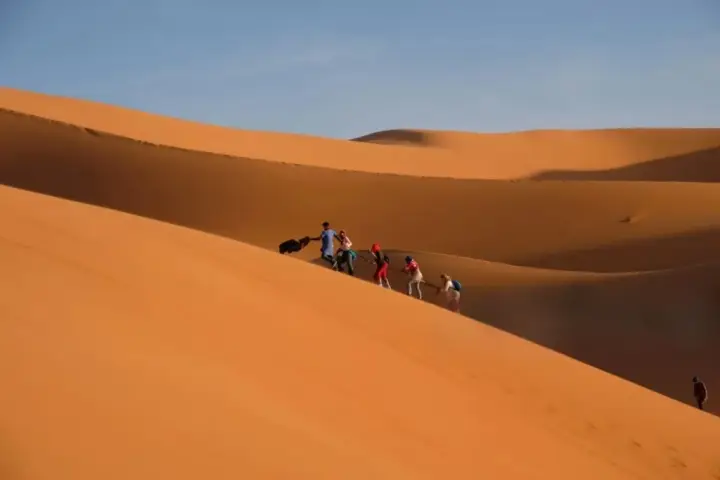
Todra narrows the landscape into vertical rock walls and a river corridor, giving an easy walking break after long desert horizons. Near Merzouga, Erg Chebbi rises abruptly from the plain. Sunset, camp life and the changing dune colours deserve more than a rushed arrival.
The desert is given time of its own. We avoid reducing it to a quick camel photo and leave space for sunset, camp life and the silence that makes the Sahara memorable. There is room for photographs, tea, short walks and practical comfort stops without turning the day into a race.
Day 3
Merzouga: Give the Sahara a full day
Meals: Breakfast
Included: Private air-conditioned vehicle with professional local driver
Today is less about ticking off stops and more about understanding the transition from Merzouga to Merzouga.
Khemliya brings Saharan musical heritage and a chance to understand life around Erg Chebbi beyond the dunes. Rissani keeps the memory of caravan trade alive through its market, ksour and position at the edge of the Tafilalt oasis. Near Merzouga, Erg Chebbi rises abruptly from the plain. Sunset, camp life and the changing dune colours deserve more than a rushed arrival.
The desert is given time of its own. We avoid reducing it to a quick camel photo and leave space for sunset, camp life and the silence that makes the Sahara memorable. By evening, the route should feel like part of the experience, not simply the distance between two hotels.
Day 4
Merzouga → Ouarzazate: A different southern road west
Meals: Breakfast
Included: Private air-conditioned vehicle with professional local driver
The day begins in Merzouga, then the road gradually carries you toward Ouarzazate.
The Draa Valley brings long palm groves, ksour and old settlements, giving the return from the desert a completely different character. Ouarzazate is a practical southern crossroads between desert roads, kasbah country and the High Atlas, with film history layered onto older caravan routes.
The desert is given time of its own. We avoid reducing it to a quick camel photo and leave space for sunset, camp life and the silence that makes the Sahara memorable. The pace stays flexible, with stops chosen for the people travelling rather than a rigid coach schedule.
Day 5
Ouarzazate → Marrakech: Cross the mountains back to the Red City
Meals: Breakfast
Included: Private air-conditioned vehicle with professional local driver
Leave Ouarzazate behind and let the scenery change on the way to Marrakech.
Aït Ben Haddou is strongest when there is time to walk its earthen lanes and understand the old caravan setting rather than stop only for a photograph. The High Atlas is not empty transfer time. Mountain villages, changing geology and the Tizi n’Tichka road make the crossing part of the story. Marrakech brings colour and movement: ochre walls, working souks, quiet riad courtyards and the evening build-up around Jemaa el-Fna.
The desert is given time of its own. We avoid reducing it to a quick camel photo and leave space for sunset, camp life and the silence that makes the Sahara memorable. There is room for photographs, tea, short walks and practical comfort stops without turning the day into a race.