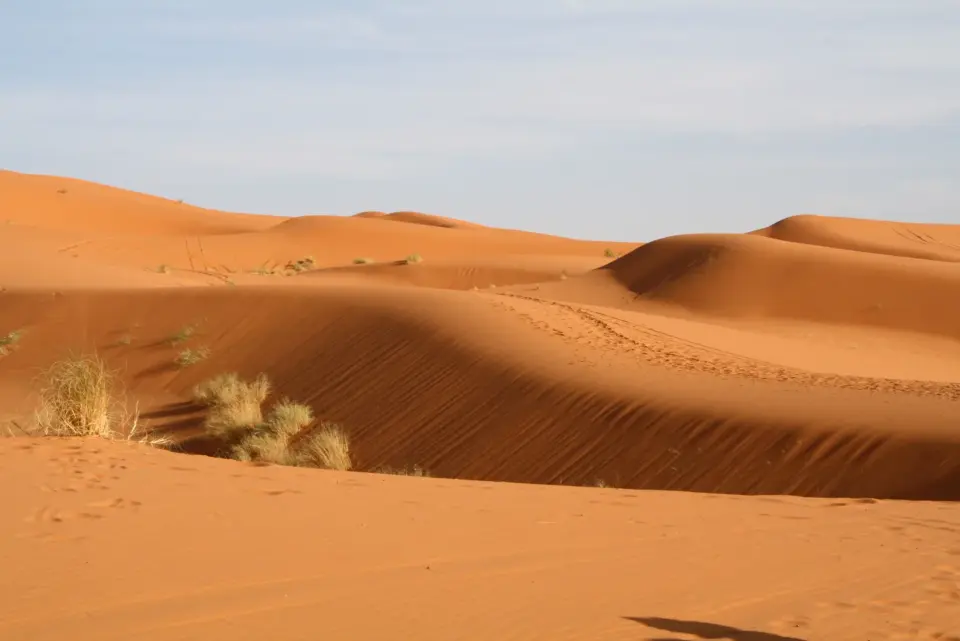
The desert begins long before the first dune
Leaving Marrakech for the Sahara is a journey through several Moroccos. The road climbs into the High Atlas, turns between mountainsides and eventually opens towards the earthen villages of the south. The landscape changes in stages. By the time you reach the dunes, the city feels much farther away than a line on the map suggests.
That is the pleasure of a desert road trip: the country between Marrakech and the camp becomes part of the experience. It is also why the route matters. Merzouga draws you east through the Dadès and Todra country towards Erg Chebbi. Chigaga carries you down the Draa Valley to M’Hamid, where the road journey gives way to a crossing on desert tracks.
Our family’s roots are in M’Hamid El Ghizlane, and tourism has been part of our family’s work since 1998. When we help you choose a desert journey, we look beyond the camp night. We think about the approach, the places along the way and the road waiting for you the following morning.
Merzouga: mountains, valley villages and the first evening at Erg Chebbi
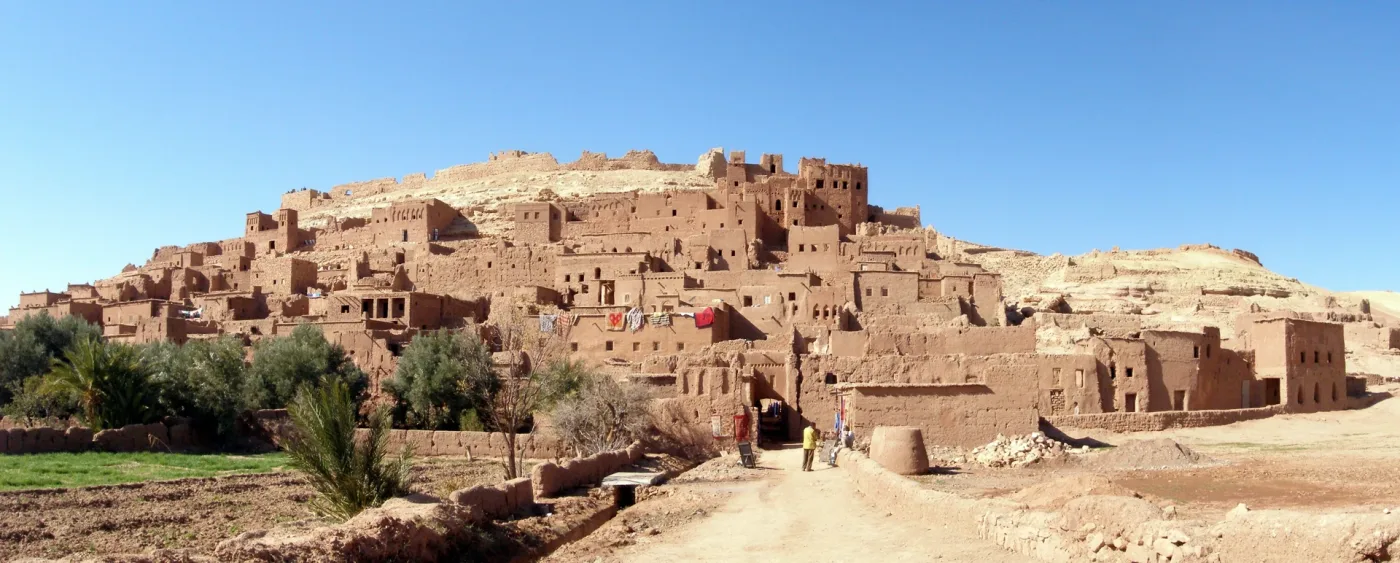
The three-day shared Merzouga route builds towards the dunes gradually. Across the Atlas, Aït Ben Haddou introduces the architecture of the south: closely grouped earth-built houses, narrow passages and towers rising from the hillside. Look at the buildings as part of their landscape, rather than only as a familiar film setting. Their colours belong to the ground around them.
The first night is in the Dadès area. That breaks the outward journey in the valleys instead of trying to reach the dunes in a single push. On the second day, the Todra area brings another change of scale, with high rock walls replacing the lower silhouettes of villages and cultivated land.
Then comes Merzouga. The village sits beside Erg Chebbi, the dune field visited by both our Marrakech-return and Fes routes. Towards evening, ridges can shift from bright ochre to deeper shadows as the light lowers. The included camel ride brings the journey into the sand before the camp night. There is time for that evening atmosphere and the following morning; on a compact three-day trip, these are precious hours rather than a whole free day.
Choose the shared Merzouga tour with return to Marrakech if your holiday remains based in Marrakech and you enjoy watching a long journey unfold through different landscapes.
Continuing to Fes gives the third day a new direction
If Fes is already on your Morocco itinerary, the route through Merzouga offers an appealing way to connect the two cities. You still have the Dadès overnight stop and the Erg Chebbi camp night. What changes is the morning after the desert: the journey turns towards the Ziz Valley and the Middle Atlas instead of retracing the road to Marrakech.
The dunes give way to another sequence of landscapes. The Ziz corridor puts the relationship between water, cultivation and dry country back in view. Farther north, higher ground changes the character of the road again. It remains a substantial travelling day, but it carries you towards the next chapter of the holiday.
This is the route we would consider first for someone planning to explore Fes after the Sahara. Settle into your riad when you arrive and save the medina for a day when you can enjoy it properly. The shared Marrakech–Merzouga–Fes journey ends in Fes; it links the cities through the desert without adding a guided city visit to the final road day.
Chigaga: follow the palm valley until the paved road falls behind
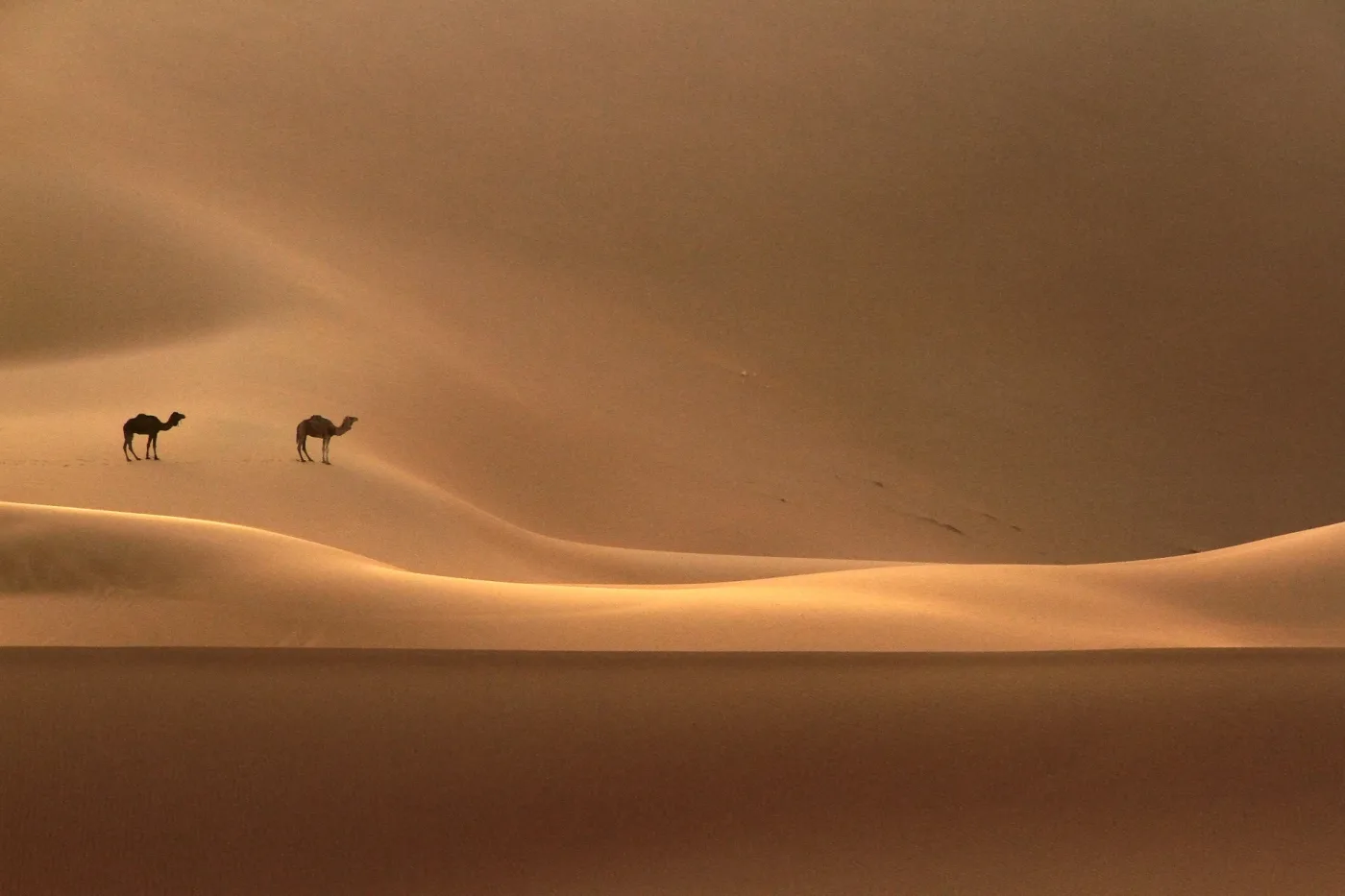
Chigaga tells a different story of southern Morocco. The shared three-day program spends its first night in Agdz, then follows the Draa Valley south through the Zagora and Tamegroute area towards M’Hamid. The palms matter here. They mark the places where water and settlement have shaped life along the valley, giving the road a rhythm of cultivated ground, villages and open country.
At Tamegroute, the pottery workshop brings you close to the craft, while the old Quranic school introduces another side of the settlement. These are visits along the journey, not a pottery class added to fill an afternoon. M’Hamid comes next: a lived-in village and the starting point for the onward approach to Chigaga.
Beyond M’Hamid, the arranged 4×4 transfer follows desert tracks. The surface and pace change, and the dunes are reached through the wider desert landscape. That approach is a central reason to choose Chigaga. The second night is at the camp, with a camel ride, a meeting with nomadic hosts and a demonstration of bread made in the sand included in the program.
For us, this region carries a family connection. For a visitor, its appeal is the way the valley, village and desert crossing belong together. Read the full Chigaga route if this is the journey that catches your imagination. The shared departure needs four paying travellers on the same date; solo travellers and couples can ask about joining it.
What an evening among the dunes can offer
A desert evening is often best enjoyed without trying to fill every minute. Walk a little away from the busiest part of camp, notice the line of a ridge, and watch how distance becomes harder to judge between the dunes. Wind and cloud can change the scene; the attraction lies in being there as it changes.
Erg Chebbi and Erg Chigaga both offer that encounter with sand and open space, reached by different journeys. Neither needs to be described as the only “real” desert. Merzouga fits the eastern valleys and the onward connection to Fes. Chigaga belongs to the Draa and M’Hamid approach. Choose the story you want to travel through.
A single camp night has a clear rhythm: arrival, the evening, sleep and the next morning before moving on. If your idea of the desert includes a long unhurried walk or a full morning outside the tent, make room for it in a longer itinerary. Our guide to two, three and four-day trips explores that choice in more detail.
The company of a shared journey
On a shared tour, conversation can become part of the road: someone notices a village detail you missed, another traveller has come from the city you are heading towards. You share the vehicle and the day’s rhythm, including the pauses and the time to move on. It suits people happy to let the route unfold alongside others.
Sleeping arrangements are a separate choice. A couple can share the transport and still want a tent together; someone travelling alone may prefer single occupancy. Tell us what makes you comfortable so the room and tent arrangements match the trip you have in mind.
For families and friends, think about how everyone feels about mountain roads, walking stops and longer stretches in the vehicle. If one person needs frequent changes to the pace, a longer or privately planned journey may feel easier. The right format helps you enjoy the places rather than spend the trip wishing the schedule were different.
Our advice: choose the journey, then give it enough space
For a short holiday based in Marrakech, Merzouga with a return keeps the route connected to your base. For a journey continuing north, finishing in Fes gives the third day a useful destination. For the palm valley, M’Hamid and the desert tracks, choose Chigaga on its own merits.
Keep the final evening flexible and leave a sensible margin before an onward flight. During the journey, have water, sun protection and an extra layer within reach; the Atlas and the dunes do not always feel like the same season. A small overnight bag is useful when your agreed camp transfer separates you from larger luggage.
Tell us your dates, who is coming and where you want to go after the desert. Then tell us what draws you south: the dune evening, the villages along the road, the company of a group or the wish to spend longer outside the city. That is where a well-chosen desert journey begins.
Photography credits
Mexico1999 · Wikimedia Commons · CC BY-SA 4.0 · Image adapted.

China Crisis · Wikimedia Commons · CC BY-SA 2.5 · Image adapted.

Jamou · Wikimedia Commons · CC BY 3.0 · Image adapted.
